When it comes to industrial components, titanium flanges stand out due to their unique chemical properties. As a supplier of titanium flanges, I’ve witnessed firsthand how these properties significantly influence their applications across various industries. In this blog, I’ll delve into the chemical characteristics of titanium flanges and explore how they impact their use. Titanium Flange
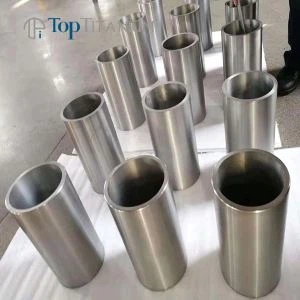
Titanium is well – known for its excellent corrosion resistance. This is primarily due to the formation of a thin, adherent, and self – healing oxide layer on its surface when exposed to oxygen. This oxide layer, mainly composed of titanium dioxide (TiO₂), acts as a protective barrier that prevents further oxidation and corrosion. In industries such as the chemical processing industry, where flanges are constantly in contact with corrosive chemicals, this property is invaluable.
For example, in a chemical plant that deals with strong acids like sulfuric acid or hydrochloric acid, regular steel flanges would corrode rapidly. The acid would react with the iron in the steel, leading to pitting, rusting, and eventually structural failure. However, titanium flanges can withstand the corrosive attack of these acids. The TiO₂ layer on the titanium surface remains stable in acidic environments, protecting the underlying metal from degradation. This means that the flanges can maintain their integrity over long periods, reducing the need for frequent replacements and minimizing downtime in the chemical plant.
In the marine industry, the corrosion – resistant property of titanium flanges is also crucial. Seawater is a highly corrosive medium due to the presence of salts, dissolved oxygen, and various microorganisms. Steel flanges used in marine applications are prone to rusting and crevice corrosion. Titanium flanges, on the other hand, are highly resistant to seawater corrosion. The passive oxide layer formed on titanium offers protection against the aggressive marine environment, making them suitable for use in offshore oil rigs, shipbuilding, and underwater pipelines. Their long – term durability in marine settings translates into cost savings for ship owners and operators by reducing maintenance and replacement costs.
Another important chemical property of titanium is its low density and high strength – to – weight ratio. Titanium has a density of about 4.5 g/cm³, which is much lower than that of steel (approximately 7.85 g/cm³). Despite its lower density, titanium has high tensile strength, comparable to that of some high – strength steels. This property makes titanium flanges ideal for applications where weight reduction is a key consideration.
In the aerospace industry, every kilogram of weight saved can lead to significant fuel savings. Titanium flanges are used in aircraft engines, airframe structures, and hydraulic systems. Their low weight helps to reduce the overall weight of the aircraft, improving its fuel efficiency and performance. At the same time, their high strength ensures that they can withstand the high pressures and stresses encountered during flight. For instance, in the engine compartment, where temperatures are high and pressures are extreme, titanium flanges can perform reliably without adding excessive weight to the engine assembly.
In the automotive industry, the trend towards lightweight vehicles to improve fuel economy and reduce emissions has also led to the increased use of titanium flanges. They can be used in exhaust systems, suspension components, and other critical parts. The high strength – to – weight ratio of titanium allows automakers to design lighter – weight vehicles without sacrificing safety and performance.
The chemical reactivity of titanium at high temperatures is another aspect that affects its use. Titanium has a relatively low melting point compared to some high – temperature alloys, but it can react with oxygen, nitrogen, and hydrogen at elevated temperatures. Above 600°C, titanium starts to react with oxygen in the air to form titanium oxide, and with nitrogen to form titanium nitride. This reactivity can be both an advantage and a disadvantage, depending on the application.
In some high – temperature industrial processes, such as in the production of certain metals or ceramics, the reactivity of titanium can be harnessed. For example, in the manufacture of titanium alloys, the controlled reaction of titanium with other elements at high temperatures can produce alloys with specific properties. However, in applications where high – temperature stability is required, special precautions must be taken.
In the power generation industry, especially in gas turbines, where temperatures can reach very high levels, titanium flanges need to be properly protected. Coatings or inert gas shielding can be used to prevent the reaction of titanium with the surrounding atmosphere. This ensures that the flanges maintain their mechanical properties and integrity under high – temperature operation.
The biocompatibility of titanium is yet another remarkable chemical property that has a significant impact on its use. Titanium is non – toxic and does not cause adverse reactions when in contact with living tissues. This makes titanium flanges suitable for medical applications.
In the medical device industry, titanium flanges are used in orthopedic implants, dental implants, and surgical instruments. For orthopedic implants, such as hip and knee replacements, the biocompatibility of titanium ensures that the body accepts the implant without rejection. The flanges used in these implants can provide a stable connection between different components, allowing for proper functioning of the artificial joint. In dental implants, titanium flanges help to anchor the implant firmly in the jawbone, promoting osseointegration (the direct connection between the bone and the implant surface).
The weldability of titanium also affects its application as flanges. Titanium can be welded using various techniques, such as tungsten inert gas (TIG) welding and laser welding. However, welding titanium requires strict control of the welding environment to prevent contamination. The presence of oxygen, nitrogen, or hydrogen during welding can lead to the formation of brittle compounds in the weld zone, which can reduce the strength and ductility of the welded joint.
As a supplier of titanium flanges, we ensure that our flanges are welded using proper techniques and in a controlled environment. This guarantees that the welded joints have high quality and meet the requirements of different applications. For example, in pipeline systems, where the flanges need to be welded together, the quality of the weld is crucial for the overall integrity of the pipeline. A well – welded titanium flange can prevent leaks and ensure the safe and reliable operation of the pipeline.
In conclusion, the chemical properties of titanium flanges play a vital role in determining their applications across a wide range of industries. The corrosion resistance makes them suitable for use in harsh chemical and marine environments; the low density and high strength – to – weight ratio are beneficial for aerospace and automotive applications; the high – temperature reactivity requires special handling in high – temperature processes; the biocompatibility opens up opportunities in the medical field; and the weldability affects the manufacturing and installation of the flanges.
If you are in need of high – quality titanium flanges for your industrial or medical applications, I invite you to contact me to discuss your specific requirements. We have a wide range of titanium flanges available in different sizes, grades, and specifications, and our team of experts can provide you with professional advice and solutions. Let’s work together to find the best titanium flanges for your project.
Titanium Wire References
- "Titanium: A Technical Guide" by John C. Williams
- "Corrosion Resistance of Titanium Alloys in Aggressive Chemical Environments" – Journal of Materials Science
- "Biomedical Applications of Titanium and Its Alloys" – Biomaterials Research Journal
Baoji Top Titanium Industry Co., Ltd.
As one of the most professional titanium flange manufacturers and suppliers in China, we’re featured by quality products and good price. Please rest assured to buy bulk titanium flange in stock here and get quotation from our factory. Customized orders are welcome.
Address: No. 2, South Section Of Phoenix 2nd Road,High-Tech Zone, Baoji,Shaanxi, China (Mainland)
E-mail: sales@bjtopti.com
WebSite: https://www.china-topti.com/
