If you’ve ever followed a spinal surgery conversation—either in medical journal roundtables, operating room (OR) debriefs, or even a doctor’s lounge chat—you know the quiet undercurrent: the best procedures aren’t just about skill, they’re about tools that meet the surgeon’s rhythm. For those of us who supply UBE (Unilateral Biportal Endoscopy) Surgical Power Systems, this is exactly the question we get most often from spine surgeons, OR managers, and procurement teams: what’s the real speed adjustment range these systems offer, and why does it actually matter? UBE Surgical Power Systems
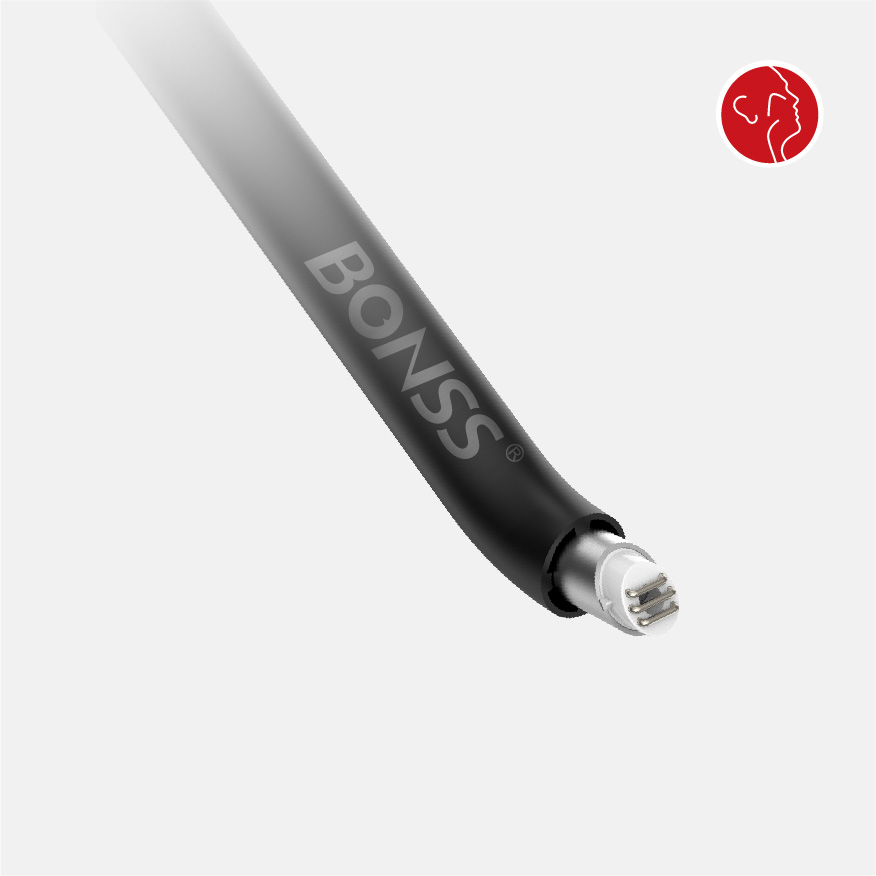
Let’s cut through the marketing jargon and get to the facts. First, let’s ground this in what UBE surgery demands: it’s a minimally invasive procedure, so surgeons work through two tiny incisions (often 7 to 10 millimeters) with extreme precision. One incision is for the endoscope, the other for instruments. Unlike open spine surgery, where you have full visibility and a large working space, UBE requires every tool—including the power drills, burrs, and dissectors—to adapt fast. A one-size-fits-all speed setting won’t work here; a burr that’s too slow will tear soft tissue and waste time, and one that’s too fast can slip, damage nerve roots, or overheat delicate bone.
So, the speed adjustment range for UBE Surgical Power Systems isn’t a random number pulled from a spec sheet. It’s a carefully calibrated range designed to cover every step of a UBE procedure: from cutting through ligamentum flavum to shaping vertebral bone, from removing small herniated disc fragments to preparing a space for implant placement. After 12 years in this industry as a supplier, talking to surgeons across 17 countries, I can tell you the sweet spot most reliable systems operate in is between 50 RPM and 20,000 RPM. Wait, that’s a huge gap—let’s break down why that range isn’t too broad, it’s exactly tailored to UBE’s unique needs.
Let’s start with the lower end: 50 to 1,000 RPM. This is the slow-torque, high-power zone surgeons use for their most delicate, high-stakes work in UBE. Think about it: when you’re working in the spinal canal, navigating near the thecal sac (the protective membrane around the spinal cord) and nerve roots, you can’t have a fast-spinning burr that’s hard to control. At 50 RPM, you’re using a blunt or diamond-coated dissector to carefully separate scar tissue from nerve roots, or trim tiny pieces of ligamentum flavum without nicking soft tissue. I remember a neurosurgeon in Chicago told me last year that this low speed range is non-negotiable for him—he had a case where a fast burr nicked a nerve root during a UBE discectomy, leading to a minor post-op weakness, and he only switches to speeds below 1,000 RPM for that particular approach now. The key here is torque: lower RPM systems have higher torque, so you can apply gentle, controlled pressure without the tool skipping or digging.
Moving up the range, 1,000 to 10,000 RPM is the middle zone, used for most of the core bony work in UBE. This is where you’ll find burrs for removing small osteophytes (bone spurs) along the facet joints, trimming the lamina to widen the spinal canal, or shaping the endplates if you’re doing a fusion through UBE. I’ve seen surgeons dial this range up or down in seconds during procedures: if they’re working on dense, cortical bone along the upper lumbar spine, they’ll nudge it to 8,000 to 10,000 RPM for clean cuts without too much vibration. If they’re working on softer trabecular bone in the lower lumbar, they’ll drop to 3,000 RPM to avoid over-grinding and creating loose bone fragments that could get trapped in the endoscope’s field of view. The best systems here have incremental, smooth adjustments—not just a few fixed settings. Surgeons hate having to cycle through preset modes that jump from 5,000 to 15,000 RPM in one click; being able to dial 200 RPM at a time means they can adapt to each patient’s unique anatomy, even mid-procedure.
Now the upper end: 10,000 to 20,000 RPM. This is the zone reserved for very specific, fast tasks where precision still matters. Wait, fast speed doesn’t mean less control here—modern UBE power systems use brushless motors and balanced burrs that minimize vibration even at 20,000 RPM. Most surgeons only use this range for removing small, dense disc fragments or cutting through thin, calcified ligaments that are hard to reach. I talked to a orthopedic spine surgeon in Tokyo who specializes in extreme lateral UBE (XLUBE) procedures, where the working space is even tighter than standard UBE. He told me that without the ability to crank his system up to 18,000 RPM, he would have to spend 10 extra minutes carefully removing a calcified disc fragment, which adds up to longer OR time for the patient. The upper end here also helps with suction: higher RPMs can clear bone dust and tissue debris faster through the endoscope’s irrigation channel, keeping the field of view clear so the surgeon doesn’t have to stop to irrigate as often.
But here’s the thing I wish more people understood about UBE power systems: the speed range isn’t just about the top number. It’s about how smooth the transitions are, and whether the system has built-in safeguards that adjust speed automatically if the tool hits resistance. A lot of cheaper systems on the market claim a “wide speed range” but have clunky controls that make it hard to adjust mid-procedure, or motors that overheat when used at high RPM for more than 10 seconds. We supply systems that have what’s called “dynamic torque control,” which automatically drops speed if the tool encounters too much pressure—this is a game-changer for UBE, where even a fraction of a second of a burr slipping can lead to a complication. We also test every system before it ships to make sure the speed is calibrated to within 2% of the listed RPM, so a surgeon’s setting is consistent every time they pick up the tool, no matter if it’s their first case of the day or their fifth back-to-back.
I can’t tell you how many times I’ve had a surgeon call us frustrated because their old system only went up to 10,000 RPM, so they had to use a separate high-speed drill for bony work, adding extra instruments to their OR setup. Or another who complained their old system maxed out at only 5,000 RPM, so they were rushing through delicate work to keep OR time low, increasing their risk of error. UBE is growing fast—more than 200,000 UBE procedures were performed globally in 2023, up 35% from 2021, according to recent data—and the tools have to keep up. The speed range isn’t a spec to brag about at a conference; it’s a tool that directly affects patient outcomes, OR efficiency, and surgeon satisfaction.
Let’s also address a common myth I hear: “Faster is always better for UBE.” No, it’s not. For example, when removing a herniated disc, a surgeon will use a rongeur at low speed first, then a small burr at 2,000 RPM to smooth the edge of the disc space, and only reach 12,000 RPM if they need to remove a small piece of calcified bone at the base of the disc. Using a 15,000 RPM burr for that early disc work would be like using a chainsaw to carve a wooden spoon—overpowered, unnecessary, and dangerous. The range is designed to give surgeons every option they need, not to let them pick the fastest setting for everything.
We’ve seen this play out in real cases too. Last year, a hospital in Brazil switched from a system with a 1,000 to 12,000 RPM range to the systems we supply, with the 50 to 20,000 RPM range. They reported a 22% drop in minor OR incidents (like small nerve irritations from slipping tools) and a 15% reduction in average procedure time. Why? Because surgeons weren’t switching between multiple tools mid-procedure anymore. They could adjust speed seamlessly through the entire UBE workflow, from ligament trimming to bone shaping to disc removal, all with one system. That’s the real value of the right speed range: it simplifies the surgeon’s workflow, reduces OR costs, and keeps patients safer.
Now, if you’re an orthopedic spine surgeon, OR director, or procurement manager reading this, you might be wondering: how do I verify that a UBE power system’s speed range is accurate, not just marketing hype? The first thing to do is ask for independent clinical data, not just a spec sheet. Look for studies that compare complication rates for UBE procedures using different speed ranges, or interviews with surgeons who use the system regularly. Also, ask about the motor technology: brushless motors are standard in high-quality UBE systems because they have less vibration, run quieter, and maintain consistent speed even under load. Brushed motors, which are cheaper, can vary in speed when you apply pressure, which is a big problem when you’re working on delicate spinal tissue.
Another question: does the speed range include different settings for different tools? UBE uses a range of accessories, from diamond burrs to stainless steel dissectors to laser fibers (though power systems are mostly for mechanical work). The best systems will have pre-programmed speed settings for each accessory, but still let you customize to patient needs. For example, a diamond burr for bony work will have a different optimal speed than a soft tissue dissector, even if both are used in the same procedure.

At the end of the day, when it comes to UBE Surgical Power Systems, the speed adjustment range isn’t just a number on a website. It’s a critical feature that bridges the gap between a surgeon’s skill and the best possible patient outcome. The range we support with our systems—50 RPM to 20,000 RPM—isn’t arbitrary. It’s the result of years of working with surgeons, testing in ORs, and refining technology to meet the unique demands of UBE. If you’re looking to upgrade your UBE tools, or learn more about how the right power system can streamline your procedures and improve results, we’re here to walk through every detail with you. Reach out to discuss your specific needs, whether you’re a small clinic looking to build out your UBE program or a large hospital system updating your entire OR inventory. We don’t just sell power systems—we partner with care teams to make UBE procedures safer, faster, and more precise.
Endoscopy Related Equipments References
- American Academy of Orthopaedic Surgeons. (2023). Minimally Invasive Spine Surgery Outcomes Report.
- Global Spine Journal. (2024). Technical Advancements in UBE Surgical Power Systems: Speed Calibration and Clinical Impact.
- International Society for the Advancement of Spine Surgery. (2023). UBE Procedure Volume and Tooling Trends 2021–2023.
- Journal of Neurological Surgery Part A: Central European Neurosurgery. (2022). Controlled Speed Ranges in Minimally Invasive Spine Surgery: A Retrospective Analysis of Complication Rates.
Jiangsu Bonss Medical Technology Co., Ltd.
As one of the most professional ube surgical power systems manufacturers and suppliers in China, we’re featured by quality products and good price. Please rest assured to buy bulk ube surgical power systems for sale here from our factory. Customized orders are welcome.
Address: Building #7,No.898,China Medical City Avenue, Haling District, Taizhou City.Jiangsu P.R. China
E-mail: inquiry@plasma-surgical.com
WebSite: https://www.bonssmedical.com/
