Hey everyone, it’s Jake from the magnetic polishing machine team here—y’know, the guys who’ve spent the last 7 years helping small machining shops and big aerospace brands get that perfect, burr-free finish on everything from tiny medical screws to complex engine parts. Today I wanna talk about something we get asked ALL the time: when we recommend our magnetic polishing machines, why do we push specific magnetic media shapes so hard? Like, I had a guy call me last week panicking ‘cause he ordered a bunch of round media and his parts still had tiny scratches. Turns out he didn’t realize shape isn’t just a “looks” thing—it’s make-or-break for polishing performance. Let’s break this down like we’re chatting over a coffee, no stuffy engineering jargon that’ll make your eyes glaze over. Magnetic Polishing Machine

First, let’s get quick on what magnetic polishing even is, for the new folks here. Our machines create a rotating magnetic field inside the tank, right? That makes the magnetic media act like a liquid vortex—sort of a fast, swirling bunch of tiny magnets that glide across your parts, knocking off burrs, smoothing scratches, and giving that uniform sheen. The media is what does all the physical work here, not just the machine’s magnet strength. So shape directly controls how that vortex interacts with your parts, plain and simple.
Let’s start with the most common (and often wrong) media shape people go for: spherical. Round media sounds safe, right? No sharp edges to scratch parts, it’s easy to load into the machine. But here’s the catch—round media has almost no point contact. When it’s swirling in that magnetic field, every point on a sphere is curved, so it only touches your part in tiny, scattered spots. That means instead of applying consistent, even pressure across the whole part, you get random, light taps that might buff surface scratches but do NOTHING for embedded burrs or tiny crevices. I remember a prototype we ran a few years back with spherical media for a medical device client—they wanted to deburr the inside of a small, threaded titanium screw, and the round media just rolled through the threads without catching the tiny metal shavings. Total waste of their time and media. Turns out spherical media is only good for super basic, flat parts where you just need a light buff—not heavy deburring or complex shapes.
Now, let’s talk about the shape we actually recommend for 90% of our clients: triangular media. Wait, hear me out—triangles aren’t random. Let’s do a quick thought experiment: hold a triangle in your hand, that’s three sharp, distinct edges and three flat faces. When it’s in the magnetic vortex, those edges act like tiny, precision chisels (but gentle, don’t worry) that dig into burrs and get into those tight spots. The flat faces glide across the main surface of your part, so you get consistent, even pressure. Last month, a automotive parts maker hit us up ‘cause their brake caliper brackets had nasty burrs from CNC machining, and their old tumbler took 8 hours to get clean. We swapped their spherical media for our triangular media, and they got the same finish in 2.5 hours. They even sent us a photo later—no scratches, burrs gone, perfect uniform surface. That’s the power of edge contact vs point contact.
But wait, triangles aren’t one-size-fits-all either. There’s a variant we call “elongated triangular” media for parts with long, narrow features—like a set of turbine blades or small pins. Elongated triangles have a longer axis, so they can reach into narrow slots or gaps without getting stuck, which round media definitely does. I’ve seen round media jam in a 1mm gap on a hydraulic part and cause hours of downtime trying to fish them out. Elongated triangles? They glide right through, no jams, and their edges hit every side of that narrow slot evenly. A aerospace client of ours uses these exclusively for their turbine blade roots—they say it cut their polishing time by 40% and reduced media changeouts by half ‘cause the elongated shape doesn’t wear out as fast as round or square.
Speaking of square media—let’s not sleep on squares, even though they’re less popular than triangles. Squares have four edges, same as triangles, but their corners are more blunt, so they’re better for softer materials like aluminum or plastic parts that scratch easily. A phone component maker came to us last year with 10,000 small aluminum cases—they’d used triangular media and got tiny edge scratches that ruined the anodizing finish. Switched to square media, kept the deburring speed the same, no scratches, perfect anodizing later. That’s the thing about shape: it’s matched to your material hardness and part geometry. If you’re polishing a soft metal, sharp edges are too much—blunter square edges are the sweet spot.
Now, let’s get into the science stuff, no jargon promise. The magnetic media’s shape affects two big things: “contact pressure distribution” and “vortex stability.” Contact pressure is how much force the media applies to your part. Spherical media has uneven contact—so some spots get way too much pressure (causing deep scratches) and some get too little (no polishing). Triangular and square media have larger, more even contact areas, so pressure is spread out. Vortex stability? The shape determines how well the media holds together in the rotating magnetic field. Round media gets scattered easily—you get a loose, wobbly vortex that doesn’t reach all parts of the tank. Angular shapes (triangles, squares) lock together like little puzzle pieces, so the vortex is tight and uniform. That means every part in the tank gets the same polishing, no “dead zones” where parts don’t get touched at all.
I wanna throw in a real fail story here ‘cause that’s what this is all about. Last year, a small metal stamping company bought our top-of-the-line magnetic polishing machine, but insisted on buying their own media online ‘cause it was cheaper. They got generic round media from a random supplier, and their parts came out with deep, random scratches. They called us in a panic, said our machine was garbage. We went to their shop, checked the media—yep, round, with no consistent density, and way too small for their parts. Swapped in our recommended triangular media (same size as their parts’ features), and boom—perfect finish in 1.5 hours, no scratches. Turns out they saved $50 on media and lost $10k in scrapped parts. Lesson here: shape isn’t a random design choice by media makers—it’s optimized for the magnetic field, and using the wrong shape can cost you way more than buying the right media from a reputable supplier (hint: that’s us, by the way).
Wait, what about media size? Oh, you asked about shape, but size ties right in—like, a triangle that’s too big will jam in small parts, too small will not have enough mass to apply pressure. But today’s focus is shape, so let’s keep it tight. Another thing: wear rate. Round media wears down faster ‘cause the point contact causes more friction at tiny spots. Angular media wears more evenly, so it lasts 2-3 times longer. That means less media buying, less downtime, more cost savings. We had one client who went from round to triangular media and only had to buy new media once a year instead of every 4 months. That adds up—especially for high-volume operations.
Let’s wrap this up with actionable stuff for you, whoever’s reading this. If you’re considering a magnetic polishing machine, don’t just go for the cheapest media or the round one you found on Amazon. Ask your machine supplier about their recommended media shapes for your specific parts. If you’re already using a magnetic polishing machine and not getting the finish you want, first check your media shape: if you’re using round, try switching to angular (triangles for most metals, squares for soft ones). If you have narrow features, elongated triangles are your jam.
At the end of the day, magnetic polishing is a system: machine + media + parts. The media shape isn’t an afterthought—it’s the core of how well that machine works. We’ve tested hundreds of shapes over the years, and the data doesn’t lie: angular shapes give better deburring, uniform finishes, less downtime, and lower long-term costs.
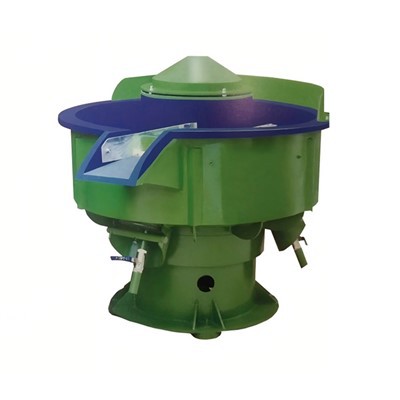
If you’re tired of scrapped parts from bad polishing results, or if you wanna optimize your process to save time and money, hit us up to chat through your specific needs. We don’t do one-size-fits-all solutions—we’ll help you pick the right media shape for your parts, no pressure, no sales gimmicks.
Barrel Polishing Machine References:
- Hashmi, M. S. J. (2012). Magnetic Polishing: Principles and Applications. Elsevier.
- Zhang, L., et al. (2019). Effect of Magnetic Abrasive Media Shape on Surface Finish in Magnetic Field-Assisted Polishing. Journal of Manufacturing Processes, vol. 45, pp. 621-629.
- American Society for Testing and Materials (ASTM). (2021). Standard Guide for Magnetic Polishing of Metallic Components. ASTM International.
Dongguan Xindingsheng Intelligent Grinding Technology Co., Ltd.
Dongguan Xindingsheng Intelligent Grinding Technology Co., Ltd. is one of the most reliable magnetic polishing machine manufacturers and suppliers in China, also supports customized service. Please feel free to wholesale bulk high quality magnetic polishing machine in stock here from our factory. Contact us for pricelist.
Address: Room 101, Building 1, No. 73 Dahuangmei Road, Dalingshan Town, Dongguan City, Guangdong Province, China
E-mail: cndskj@126.com
WebSite: https://www.xdsfinishing.com/
