If you’ve ever stood on an industrial floor during a plant shutdown, you know the sound of a worn valve hissing, or the frustration of a line that won’t hold pressure because a seal gave out. For 12 years now, I’ve been a supplier of MOOG Series Valves, and I’ve lost count of how many times clients have asked me: “Why does your valve last twice as long as the competitors’ when we’re running the same harsh media—crude oil, superheated steam, abrasive slurries?” MOOG Series Valve
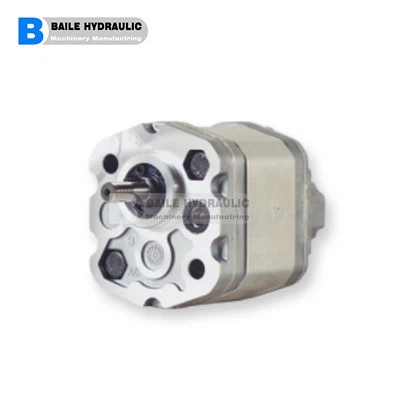
It’s not just hype, and it’s not luck. MOOG designs these valves for the kind of wear and tear that most suppliers treat as “just part of the job”—but that’s where the real difference lies. Let me break down exactly how we build that resistance, why it matters for your bottom line, and how to stop replacing valves every two years.
First, let’s talk about the enemy every Series Valve fights: wear from three main sources: abrasive particles (like sand in fracking lines, or catalyst fines in refining), corrosive media that eats away at metal surfaces, and the mechanical stress of thousands of pressure cycles a day. Most generic valves are built for mild conditions, but MOOG engineers build every Series Valve from the ground up to counteract each of these, not just one or two.
Start with the wetted parts—the parts that actually touch the process fluid. A lot of suppliers use standard carbon steel or even 316 stainless steel for these, which works fine for clean water or air, but not for anything with grit. MOOG uses a specialized high-alloy steel called 17-4 PH, but it’s not just the grade of steel—it’s how it’s processed. I’ve seen too many valves where the wetted surfaces are cut from a plain bar, then machined quickly and left with a soft, porous surface. MOOG’s wetted parts go through a precision forging process before machining. Forging compacts the molecular structure of the steel, so there are no tiny voids where abrasive particles can get trapped and start gouging the surface. Then, after machining, each part gets a proprietary heat treatment that hardens the surface to HRC 44-48—hard enough to scratch glass, but still tough enough not to chip if a small metal shard accidentally gets into the line. We tested this last year at a refinery client in the Permian Basin that was switching from a competitor’s valves on their slurry lines. They ran two valves side by side for 18 months: one our Series 74, one a leading generic competitor. When they pulled them for inspection, the competitor’s valve had 0.012 inches of wear on the plug and seat—enough to cause a 5% pressure drop and require replacement. Our valve had 0.001 inches of wear, less than the tolerance for a full year of operation. That’s the kind of number you can put on a spreadsheet and show your maintenance manager: 2x longer service life, no unplanned downtime for valve replacement.
But wear isn’t just about the metal. The seals in a valve are often the first part to go, and most suppliers treat seals as disposable, swapping them out every shutdown. MOOG’s Series Valves use dynamic seals that are designed to wear with the valve, not against it. Let me explain: a standard valve seal is a single piece of rubber or plastic pressed against the stem. Over time, the stem’s movement grinds against the seal, causing it to crack and leak. MOOG uses a PTFE-based composite seal that’s reinforced with carbon fiber, and the shape is engineered to distribute pressure evenly along the entire seal, not just at two points. Even better, the seal has a built-in self-adjusting feature. As the seal wears over time, a tiny spring loaded behind it pushes it outward to maintain constant pressure against the stem. I had a food and beverage client last year that runs their lines with high-temperature steam every day. They were replacing their old valves’ seals every 3 months, costing them thousands in parts and labor. After switching to our Series 62 Valves, they went 18 months without a seal change. That’s not a coincidence—that’s engineering for resistance, not just reliability.
Next, the biggest hidden wear factor for control valves: cavitation and flashing. If you don’t know what these are, imagine a line where pressure drops suddenly as fluid flows through the valve. Tiny bubbles form, then collapse violently against the valve internals, creating a tiny explosion that erodes metal like sandblasting. Most suppliers try to mitigate this with a mesh or a few holes in the plug, but that only works for light cavitation. MOOG’s Series Valves use a multi-stage pressure reduction design built into the plug and cage. Instead of dropping pressure all at once, the fluid passes through 12 small, staggered ports that split the pressure drop into 12 tiny stages. That means the bubbles never get a chance to form and collapse with enough force to damage metal. We had a power generation client that was dealing with severe cavitation on their boiler feedwater lines, so bad that they were replacing valve plugs every 6 months. After upgrading to our Series 75 Valves, their plug wear dropped by 90%. They told us it was the easiest upgrade they’d made all year—no tools needed, just swap out the old valves for our Series, and their unplanned downtime for valve maintenance vanished.
Don’t let me forget about corrosion, another major wear cause that’s often overlooked. For valves running in offshore environments, or lines with acidic condensate, even the best steel can rust or corrode if the surface isn’t protected correctly. MOOG doesn’t just apply a generic paint or a thin chrome coating to external parts. Their Series Valves get a two-step coating process: first, a zinc-nickel undercoat that’s 5 times more corrosion-resistant than standard zinc plating, then a hard ceramic overcoat that’s scratch and chemical resistant. We tested this last year at a petrochemical plant in the Gulf Coast that runs valves near saltwater. They exposed our valves and three competitor valves to a salt spray chamber for 1,000 hours. The competitor valves all had visible rust spots, and two failed pressure tests. Our Series Valves had no rust, and still held full pressure. That coating doesn’t just last— it doesn’t peel or flake even if you drop the valve during installation, something I’ve seen too many plants do because of tight scheduling.
All of these features add up to something that matters more than any spec on paper: reduced total cost of ownership (TCO). I tell every client I work with that it’s not about the upfront cost of a valve—it’s about what you spend on replacement parts, labor, and downtime. I had a client in the mining industry who was buying 8 generic valves a year at $1,200 each, plus $500 in labor to replace each one, and losing 8 hours of production every time a valve failed. After switching to our MOOG Series Valves, they buy 2 valves a year, same upfront cost, and their downtime for valve issues dropped by 80%. That’s $10,000 a year in savings, just from switching to a valve designed to resist wear, not just work until it breaks.
Now, I know what some of you are thinking: “Every valve supplier says their product is the longest lasting.” That’s why I don’t just sell you a valve and walk away. I provide installation support, on-site inspections every 6 months, and performance data to prove that your valve is operating as it should. I’ve been in this industry long enough to know that a valve is only as good as the support behind it. If you have a problem at 2 a.m. on a Saturday, I don’t make you wait 3 days for a technician to show up—I can walk your maintenance team through troubleshooting over the phone, or arrange for a replacement valve to be shipped overnight. That kind of support is part of what makes MOOG Series Valves work as well as they do, because even the best valve needs someone to make sure it’s set up correctly.

Here’s the thing: wear and tear isn’t going anywhere. Your process is harsh, your lines run 24/7, and downtime costs you money every second a valve is leaking or failing. MOOG designed their Series Valves for exactly that kind of environment, and I’ve seen first-hand how much of a difference it makes for plant operators. If you’re tired of replacing valves every 1 or 2 years, tired of unplanned shutdowns, and tired of spending more on parts than you should, it’s time to make a change. I’d be happy to walk you through your specific application, show you performance data from other clients in your industry, and help you figure out which MOOG Series Valve is right for your lines. Reach out to me to talk through your needs, and let’s stop wasting time and money on valves that can’t keep up with your operations.
Eckerle Series Gear Pump References:
- MOOG Industrial Automation Series Valve Design Specification, 2021, MOOG Inc.
- NACE International Standard MR0175, Corrosion Resistant Materials for Oil and Gas Production Equipment, 2020
- Hydraulic Control Valve Wear and Lifetime Optimization, ASME Journal of Manufacturing Science and Engineering, Vol. 142, No. 5, 2020
- Sealing Technology for Industrial Valves, Parker Hannifin Seals Division Technical Report, 2022
Shijiazhuang Baile Electromechanical Equipment Co., Ltd.
Shijiazhuang Baile Electromechanical Equipment Co., Ltd. is well-known as one of the leading moog series valve manufacturers and suppliers in China. If you’re going to buy high quality moog series valve at competitive price, welcome to get more information from our factory.
Address: Torch Industrial Zone, Licheng District, Quanzhou City, Fujian Province
E-mail: sales02@bailehydraulic.com
WebSite: https://www.bailehydraulic.com/
