Alright, let’s cut to the chase—if you’re running a mobile kitchen, whether it’s a food truck, pop-up trailer, or event catering setup, you’ve definitely stared at a stainless steel equipment catalog and thought, “Wait, is this actually gonna work for my rolling setup?” As a stainless steel kitchen gear supplier who’s talked to hundreds of food truck owners and pop-up chefs over the years, I’m here to tell you: this isn’t just a “can I use it?” question—it’s a “why wouldn’t you?” question that’s probably already crossed your mind because you’ve heard it’s durable, but you’re low-key worried about the grind, the bounce, and the weirdness of being on wheels. Stainless Steel Kitchen Equipment
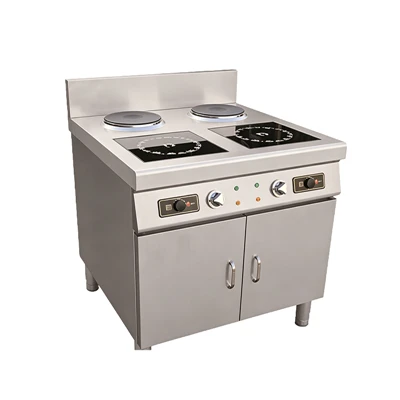
Let’s start with the basics, no fancy engineering jargon (I hate that stuff, trust me). First, what’s mobile kitchen unique? Your equipment’s not sitting on a concrete foundation in a fixed kitchen—it’s bouncing over potholes, rocking while you’re blasting through a rush, dealing with temperature swings from a cold parking lot to a hot summer event, and maybe even getting strapped down tight for a highway haul. That’s a way harsher environment than most home kitchens, so your gear needs to hold up. Now, stainless steel—let’s get real: it’s made of iron, chromium, and a little bit of other stuff that makes it not rust, right? The key here is the chromium layer that forms on the surface when it hits oxygen. And guess what? That layer is tough, but it’s not invincible—but for mobile kitchens, it’s basically a superpower.
Wait, let’s test that against mobile kitchen pain points. First, impact resistance. When you’re hauling a food truck over a bumpy highway, pots and pans slide around, ovens jostle, counters take dents. Stainless steel is way more impact-resistant than, say, aluminum (which dents like a soda can if you look at it wrong) or even some cheaper coated steel. I had a client last year who runs a taco truck—he used to go through 3 aluminum griddles a month because they’d dent so bad on his route between Austin and San Antonio. Switched to our heavy-gauge stainless steel griddle, and he’s had it for 18 months with only a tiny scratch that didn’t affect cooking at all. Scratches on stainless steel? Yeah, they happen, but unlike some other metals, they don’t open the door to rust. That chromium layer just re-forms over the scratch, so no worries there.
Next, temperature stability. Mobile kitchens deal with wild temps—early morning events in the Pacific Northwest where your propane tank is so cold it barely lights, to summer festivals in Arizona where your kitchen is cooking in 110-degree heat. Stainless steel handles that way better than a lot of alternatives. It doesn’t warp at high temps (we run our stainless steel commercial grills up to 500 degrees every day—no warping) and it doesn’t get brittle in the cold, which is a big one for northern mobile chefs who park overnight in below-freezing temps. I’ve had a guy from Minneapolis tell me he used a stainless steel prep sink for three winters, left it out in his trailer unheated, and it didn’t crack once—would’ve been done for a cast iron sink or a plastic one in a week.
Now, let’s talk about the big ones that people actually care about for mobile kitchens: cleaning, weight, and customization. Cleaning is non-negotiable—health codes are strict, and you don’t want to spend half your day scrubbing gear instead of making food. Stainless steel is non-porous, so food, bacteria, and stains don’t stick. Wipe it down with a soapy cloth, or even a power washer if you’re a big operation, and it’s good to go. No weird crevices like some plastic gear that trap gunk. I had a food truck owner who was failing health inspections because his old plastic prep table had mold in the seams—switched to our seamless stainless steel table, passed the next inspection with zero issues. That’s a win.
Weight? Wait, mobile kitchens hate being heavy because every extra pound cuts into your payload for food, staff, and gear. Wait, but stainless steel is actually a great balance. It’s heavier than aluminum, but way lighter than solid cast iron. And if you get the right gauge (we use 16-gauge for most mobile kitchen gear, not the thin 20-gauge cheap stuff that bends), it’s sturdy enough without being a dead weight. My taco truck friend—he was worried about weight too, so we customized his griddle to be slightly thinner but reinforced the edges for the bounce, saved 20 pounds, and he still hasn’t had issues. Win-win.
Customization is huge for mobile kitchens. Every food truck is different—some need extra space for a fryer, some need a built-in cooler mount, some need a counter that fits perfectly in a tiny trailer nook. Stainless steel is so moldable that we can cut it, bend it, weld it, and build exactly what you need, not some one-size-fits-all garbage. Last year, a pop-up seafood chef contacted us with a tiny 8-foot trailer, and he needed a prep sink, a small gas stove, and a place to store his shellfish totes—no standard kit fit. We built him a custom stainless steel setup that fit like a glove, and he’s been using it for events all over the Southeast. That’s the flexibility you can’t get with, say, wooden or fiberglass mobile kitchen gear.
Wait, but hold on—this isn’t all sunshine and tacos, right? I’m not gonna sell you something that has a catch. There are two things you have to watch for with stainless steel in mobile kitchens: corrosion (but not the kind you think) and magnetism (which sounds silly, but matters for some gear). First, corrosion—stainless steel doesn’t rust, but it can get “stain corrosion” if you leave food with high salt, acid, or chlorine on it for too long. Like, if you leave a bucket of vinegar for pickles on your stainless steel counter for a week, you might see a faint spot. But that’s not rust—it’s just a surface stain, and you can buff it out with a stainless steel cleaner in 5 minutes. No big deal, unlike rust which would eat through the metal. The second thing: magnetism. Some stainless steel is magnetic (called 400-series, which is great for things like grills that need to hold magnets, or magnetic knife strips) and some isn’t (304-series, which is the food-grade stuff we use 90% of the time). That’s totally fine, just don’t buy cheap 200-series stainless steel which is not food-safe and will stain way easier. Stick to food-grade 304 or 400, and you’re golden.
Another real-world test: fire safety. Mobile kitchens use open flames, hot oil, propane—fire is a real risk. Stainless steel is non-combustible, so it won’t catch fire, melt, or give off toxic fumes if it gets near a flame. I had a client in Chicago whose food truck caught on fire last year—small, from a faulty wire. The stainless steel hood and griddle were untouched, the only damage was the wiring. If he’d had a plastic hood, that would’ve been way worse. That’s peace of mind you can’t put a price on.
Let’s also talk about longevity. A fixed kitchen might replace gear every 10 years, but mobile kitchens—your gear is taking a beating, so you might replace stuff every 3-5 years. Stainless steel? If you take basic care (wipe it down after use, don’t bang random metal tools on it nonstop), it’ll last 15+ years, even in a mobile setup. Compare that to, say, vinyl counters which peel in 2 years, or aluminum which dents and leaks in 3. That’s a huge cost saver in the long run. I’ve got a customer who’s had our stainless steel prep table for 12 years, and he moved it three times when he upgraded his food truck. Still works like new.
Wait, you might be thinking: “What about the cost upfront?” Yeah, stainless steel is more expensive than some cheaper alternatives. But let’s do the math. If you buy a $500 aluminum griddle that dies in 6 months, that’s $1000 a year. A $1500 stainless steel griddle that lasts 3 years? That’s $500 a year. Way cheaper over time, and you don’t have to stress about replacing it mid-season when you’re booked solid for events. I always tell mobile chefs: pay a little more now, cry once.
Is there any scenario where stainless steel isn’t the move? Maybe if you’re running a tiny, super low-budget pop-up that only does 2 events a month and will be done in 6 months. But even then, a cheap stainless steel table is more durable than a plywood one with a plastic top. For any long-term mobile kitchen operation—food trucks, full-time event caterers, mobile bakery setup—stainless steel is the way to go.
Let me wrap this up with the real talk I give every new customer: I’ve seen chefs build entire mobile kitchens out of stainless steel, and they never look back. It handles the bounce, the temp swings, the health codes, the grease, and the chaos of being on the road. It’s not just “usable”—it’s reliable, which is everything when your whole business is moving from spot to spot.
If you’re outfitting a mobile kitchen right now, or you’re renovating an old food truck and tired of gear that breaks every 2 months, hit me up to talk through your setup. No weird sales pitches, no pushy quotes—just us figuring out what works for your menu, your trailer, and your budget.
References
Stainless Steel Kitchen Equipment National Restaurant Association. (2022). Mobile Food Unit Equipment Standards.
Stainless Steel Information Center. (2021). Stainless Steel Performance in Transport and Mobile Applications.
Food and Drug Administration. (2023). Food-Grade Materials for Food Service Equipment.
Zhejiang Anneng Kitchen Equipment Co., Ltd.
As one of the most experienced stainless steel kitchen equipment manufacturers and suppliers in China, we also accept customized order. With abundant experience, we warmly welcome you to wholesale advanced stainless steel kitchen equipment in stock from our factory. For quotation, contact us now.
Address: No. 1003 Donghai Avenue, Taizhou Bay New Area, Taizhou City, Zhejiang Province
E-mail: 13968527240@163.com
WebSite: https://www.annengkitchen.com/
