If you’re reading this, chances are you’ve streamed a movie, tuned into a live sports match, or binge-watched a TV show in the last hour. Every single one of those moments relies on a video server humming quietly in a data center somewhere, shoving digital bits into your device without you even noticing. For the past 10 years, my team and I’ve been building and selling those servers—our whole business is keeping that pipeline tight, reliable, and fast. Lately, a lot of our customers have been asking: Where are these things even going? Is video servers just a stagnant space, or is there actual stuff changing here? Video Server

Let’s start with the obvious shift no one can miss: more video, way more of it. Back in 2010, YouTube had like 100 million hours of video watched a day. Last year that number crossed 2 billion. Twitch streamers pull 5 billion minutes of live content every single day, and then there’s this whole rise of short-form video—TikTok, Reels, Shorts, all that. But quantity isn’t the only thing; quality is blowing up too. 4K used to be a premium thing, now it’s standard, and 8K is already being tested by big broadcasters and even some consumer devices. All that data doesn’t just take up space—it needs way more powerful servers to push it. We used to sell servers that could handle a few hundred concurrent streams at 1080p; now our mid-tier models knock out over 2,000 4K streams without breaking a sweat. That’s a big jump, and it’s only going to get bigger as 8K becomes mainstream.
But it’s not just about cramming more video into one server. The next big trend we’re seeing is edge servers. Wait, what does that mean? Right now, most video servers are in big central data centers—massive facilities 1,000 miles away from where you are. When you stream a show, the data has to travel all that way, bounce through a few networks, maybe hit a slow point somewhere, and then get to you. That’s why you get buffering when Wi-Fi is spotty, or lag during a live stream. Edge servers are little, mini servers that sit right on the network closer to you—like at a telecom’s local hub, or even in a retail store or office. We’re already building edge-focused models for clients like small cable companies that want to cut down on buffering for their rural customers. The cool part here is these edge servers don’t need to be as powerful as central ones, but they need to be tiny, energy-efficient, and easy to deploy. We’re talking about servers that fit in a closet, not a whole data center rack. It’s a total flip from the big, bulky servers we sold even five years ago.
Another thing: video isn’t just for streaming TVs and phones anymore. Think about live sports that let you pick your own camera angle—you can switch from the quarterback’s view to the sideline reporter’s, all in real time. That’s called multi-view video, and it’s not just for pro sports. Local news stations are testing it, and even concert venues are using it for virtual ticketing. To pull that off, a video server has to process multiple feeds at once, sync them perfectly, and let you switch between them without any lag. We’ve been tweaking our servers to handle that kind of processing lately—adding extra GPUs, tweaking the software to handle multiple streams at once. If you’re a broadcaster, that’s a huge win because it lets you offer way more features without having to buy a whole new system. The old way would have needed a separate server for each camera angle; now one server can do all of it. That’s a big cost saver, and it’s why more clients are asking for these multi-capable setups.
Then there’s AI, obviously. Everyone’s talking about AI right now, and video servers are no exception. For a long time, servers just encoded and sent video—took the raw footage, compressed it so it doesn’t use a ton of bandwidth, and shipped it. Now AI is changing that compression. Traditional compression makes some parts of the video blurry to save space, but AI can learn what parts of a video people actually care about—like a player’s face in a sports clip, or a character on a TV show—and keep those parts sharp, while smoothing out the boring background stuff. That means you get better quality at half the file size, which cuts down on bandwidth costs for our clients and makes streaming smoother for viewers. We’ve been testing AI-powered compression on our servers for a few months now, and early feedback from clients is they’re saving almost 30% on bandwidth bills without anyone noticing a drop in quality. The other big AI use is content moderation—automatically flagging harmful stuff in live streams, so clients don’t have to hire a huge team of moderators to sit and watch 24/7. Our servers are starting to come with built-in AI moderation tools now, which is something no one was even asking for two years ago.
Wait, but there are challenges here, right? It’s not all just “bigger, faster, AI.” Energy costs are a huge one. Data centers use tons of electricity, and as we add more servers, that problem only gets worse. Our clients are constantly asking us for servers that use less power. So we’ve been optimizing our servers to run cooler, use more efficient chips, and even fit more servers into the same rack without overheating. We also offer options for servers that can run on renewable energy, which is a big deal for companies that are trying to hit their sustainability goals. Another challenge is bandwidth itself. Even with better compression, more video means more demand on the internet. That’s why edge servers are so important—they cut down on how far data has to travel, which takes pressure off the main network. Plus, 5G is rolling out everywhere now, which means faster mobile connections, so edge servers can work even better for people on the go.
Let’s also talk about who’s buying these servers. It used to be just big tech companies like Netflix and YouTube, or major broadcasters. Now small and medium businesses are getting into the game too. Local restaurants are doing live cooking streams, small businesses are doing virtual events, schools are hosting live lectures and remote learning. Those folks don’t have big data teams or huge budgets, so they need servers that are easy to set up, don’t require a ton of maintenance, and aren’t way too expensive. We’ve been working on entry-level models lately—servers that are plug-and-play, come with pre-installed software for streaming, and cost a fraction of the big enterprise models. That’s a big shift for us; a few years ago we only focused on big clients, now half our new business is from small to medium companies. It’s a sign that video is no longer just for big players—it’s for everyone.
Another trend that’s flying under the radar: private video servers. A lot of people don’t want their video data sitting on a third-party server—like if a company is doing internal training videos, or a school is hosting student content, or a clinic is doing telehealth visits. Those folks need servers that are secure, can be kept on their own premises, and let them control all their data. We’ve designed on-prem video servers for exactly that kind of use case. They’re not as powerful as cloud servers, but they’re totally private, super secure, and you don’t have to pay monthly fees to a third party. Telehealth has exploded since the pandemic, and a lot of clinics are sticking with their own servers now to keep patient data compliant with privacy rules, so that’s been a huge part of our sales lately.
Let me wrap this up. The future of video servers isn’t just “bigger and faster.” It’s smaller, closer to the user, smarter with AI, and more flexible for all kinds of clients, from giant broadcasters to small local businesses. It’s about solving the real problems people are having right now: buffering, high bandwidth bills, clunky setups, security concerns. As someone who’s been in this game for years, I can tell you—this isn’t just a fad. Video is only going to keep growing, and every part of that growth relies on good video servers.
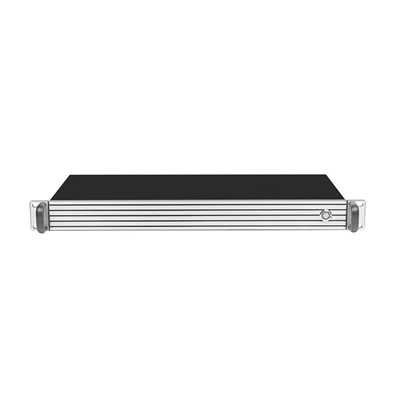
If you’re someone who’s tired of dealing with laggy streams, high bandwidth costs, or servers that are too complicated to set up, or you’re just curious about what a video server can do for your business—hit us up to talk procurement. We’ll walk through what your needs are, show you the models that work for you, and even share case studies from other clients just like you. No jargon, no pushy sales pitches—just straight talk about what works.
Transmitter References:
- YouTube. (2023). Annual Viewership Report.
- Cisco. (2024). Global Mobile Data Traffic Forecast Update.
- Streaming Media Magazine. (2023). Edge Computing in Video Delivery.
- International Data Corporation (IDC). (2024). Global Video Server Market Trends.
- Gartner. (2023). AI-Enhanced Video Compression for Media and Entertainment.
Shenzhen TranScreen Technology Co., Ltd.
As one of the most professional video server manufacturers and suppliers in China, we have world-leading production equipment and strong manufacturing capabilities. Please feel free to buy customized video server made in China here from our factory. Contact us for quotation.
Address: No. 168, Baoyuan Road, Baoan Dst., SZ, China
E-mail: inquiry@transcreen.com
WebSite: https://www.transcreen.com/
