Hey there, fellow supply chain folks, factory managers, and anyone who’s ever squinted at a composite cord strap and wondered, “Is this thing even safe for my heavy loads?” I’m [Your First Name], and I’ve been running the shop floor for our composite cord strap line for way too long to just throw a random strap on a forklift and call it good. Lately, I’ve been getting so many DMs and calls from buyers asking: “Do your straps actually have certifications? Or are they just pretty plastic-wrapped cord that’ll snap mid-shipment?” Fair question—especially after that viral TikTok a few months back of a regular polyester strap blowing out and taking a pallet of glass bottles with it. No one wants to deal with that. Today, let’s break down exactly what certifications composite cord straps (that’s our bread and butter, btw) do have, why they matter, and how to make sure you’re not falling for a “certified” fake. Composite Cord Strap
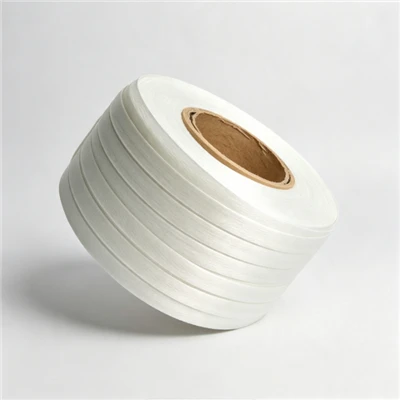
First, let’s get one thing straight: composite cord straps aren’t just your basic woven polyester or nylon strap. They’re made with high-tenacity fibers—think aramid, polypropylene, even carbon fiber blends sometimes—wound into a tight core, then wrapped in a durable outer jacket. That design is why they’re 5-10x stronger than traditional straps, lighter, and way more resistant to UV rays, chemicals, and extreme temps. But strength means nothing if there’s no proof it’ll hold up. Certifications are that proof. They’re not just random stickers we slap on boxes to make them look fancy; they’re third-party checks that our straps do what we say they do, and they meet industry rules so you don’t end up with a load on the floor.
Now, let’s dive into the main certifications that actually count, not the ones you’ll see on a cheap Amazon strap that just means “someone said it’s good.” The big one for North America is the WSTBA, or Web Sling and Tie-Down Association certification. Wait, I know—acronyms suck, but WSTBA is the gold standard here. They set the specs for all tie-down products, including composite cord straps, and they test every batch our straps go through. What do they test for? Let’s see: tensile strength (that’s how much weight a strap can hold before breaking), elongation (how much it stretches—too much stretch and your pallet slides, right), UV resistance (super important if you’re leaving straps on a truck outside for days), and even low-temperature performance (great if you’re shipping stuff up to Canada in winter). Here’s the tea: our entire production line is audited annually by a WSTBA-approved lab, so every strap that leaves our warehouse has a little tag that says it’s passed their tests. No cutting corners, no skipping checks.
Then there’s the OSHA compliance thing. A lot of buyers don’t realize this, but OSHA (the Occupational Safety and Health Administration) doesn’t “certify” products themselves—they reference existing industry standards like WSTBA to make sure your tie-downs are safe. If you’re using straps that meet WSTBA specs, you’re automatically meeting OSHA’s requirements for load securement. That’s a huge win for you because it means you’re not at risk of fines if an OSHA inspector swings by your warehouse. I can’t tell you how many times we’ve had a small business owner come to us panicking because they got a $1,500 OSHA fine for using “unverified” straps. Our WSTBA-certified straps eliminate that stress.
Now, if you’re shipping internationally, you’ll run into the TUV certification—TUV Rheinland, specifically. That’s a European-based certification that’s recognized across the EU, Asia, and a bunch of other countries. TUV tests for things like REACH compliance (that’s the EU’s rule on harmful chemicals in products) and product safety, so if you’re sending goods to Germany, China, or anywhere else that requires strict import checks, our TUV-approved straps are your ticket. We recently started doing TUV testing because more and more of our clients are global, and we don’t want to be the reason a shipment gets held up at customs. No one wants to deal with a delayed container full of electronics because your straps aren’t EU-approved.
Wait, let’s talk about the certifications that don’t matter. I see so many cheap knockoff straps with “ISO Certified” slapped on them, but ISO is a general management standard, not a product-specific test. Like, ISO 9001 means our company follows good manufacturing practices, which we do—but that’s not a test of how strong our straps are. A lot of fly-by-night strap makers get ISO 9001 just by filing some paperwork, then add it to their product listings to make themselves look legit. Don’t fall for that. Ask for product-specific certifications: WSTBA, TUV, maybe even FM approval if you’re shipping flammable goods (that’s Factory Mutual, another safety standard for industrial loads).
Let’s get real for a second. As a supplier, we don’t just sell you a strap—we sell you peace of mind. Last quarter, we had a client who was using a cheap non-certified composite strap for a shipment of 2,000 lb steel bars. The strap snapped mid-transit, the bars slid, and they had to pay $12,000 in damages and delayed delivery. They switched to our WSTBA-certified straps after that. That’s why we push certifications so hard—we don’t want that to happen to anyone else.
Also, there’s a thing called lot testing. Every batch of our composite cord straps gets tested before it leaves our facility. We take 5 straps from each production run, yank them in a lab until they break, and make sure they meet or exceed the WSTBA’s minimum specs. If one fails, the whole batch gets sent back. No exceptions. A lot of suppliers skip lot testing to save money, but that’s how you get bad straps in the wild. We’ve been doing this for 12 years, and we’ve only had 3 batches fail out of hundreds. That’s the kind of reliability certifications bring to the table.
Wait, what about custom straps? A lot of buyers come to us asking for custom-length or custom-colored composite cord straps. Do those have certifications too? Yep—we can run a small lot through the WSTBA or TUV testing process, as long as the design is the same as our standard certified straps. We don’t cut corners on custom orders either, because even a custom strap needs to hold your specific load.
I know, I know—this all sounds a little technical, but it matters. When you’re dealing with heavy loads, perishables, or high-value goods, you can’t just pick a strap off a shelf. You need to know that it’s been tested, that it meets industry rules, and that if something goes wrong, you’re covered. The certifications aren’t just stickers—they’re proof that we’ve done the work to make sure our straps actually do what we say they do.
So, if you’re tired of dealing with straps that break, fade, or don’t live up to their promises, let’s chat. We can walk you through exactly what certifications our straps have, show you the test results, and even get you a sample to test on your own loads. No hard sells, just straight talk about what works. We’ve worked with small warehouses, big box retailers, and shipping companies all over, and we know we can find the right composite cord strap for your needs.

Don’t wait until your next shipment goes sideways. Hit us up to start a conversation—we’re here to make sure your loads get where they need to, safely.
Polyester Cord Strap References:
- Web Sling and Tie-Down Association (WSTBA). "Tie-Down Specification Standard for Composite Cord Straps," 2022.
- Occupational Safety and Health Administration (OSHA). "Load Securement Requirements for General Industry," 29 CFR 1910.180, 2023.
- TUV Rheinland. "Product Safety Certification for Tie-Down Systems," REACH Compliance Annex, 2021.
- Factory Mutual (FM Global). "Standard 690: Security for Shipments," 2020.
Zhejiang Chuanghang Packaging Material Co., Ltd.
As one of the most professional composite cord strap manufacturers and suppliers in China, we’re featured by quality products and good service. Please rest assured to wholesale advanced composite cord strap for sale here from our factory. We also accept customized orders.
Address: 2nd Floor, No.2 Plant, No.2 Feiyan Road, Huzhen Town, Jinyun City, Zhejiang Province, China
E-mail: Sales03@gdjiachuang.com
WebSite: https://www.an-packstrapping.com/
